

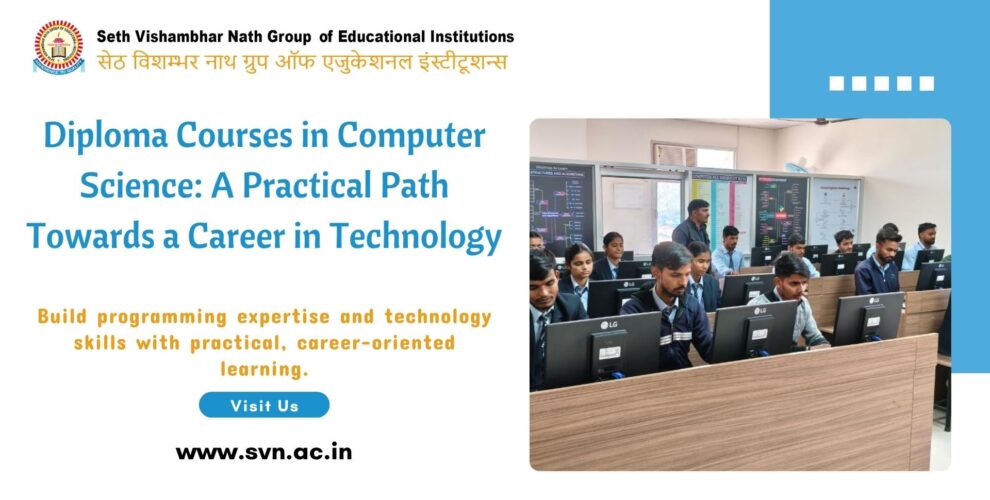
Diploma Courses in Computer Science: A Practical Path Towards a Career in Technology
Technology continues to transform the way people learn, work, and communicate. As industries increasingly rely on digital solutions, the demand for skilled professionals with technical knowledge is growing steadily. For students who wish to begin their technical education after completing school, a diploma program offers an excellent opportunity to develop practical skills and gain a strong understanding of computer science. Diploma courses in computer science are designed to provide students with the knowledge and hands-on experience required to build a solid foundation for future academic and professional growth.
Choosing the right institution is an important step in this journey. A supportive learning environment, experienced faculty, modern laboratories, and practical training help students understand technical concepts more effectively. Instead of focusing only on theoretical knowledge, a well-structured diploma program encourages students to apply what they learn through practical activities and academic projects.
Why a Diploma in Computer Science is a Smart Choice
A diploma program is suitable for students who want to build technical expertise through structured learning. It introduces learners to the fundamental concepts of computing while helping them develop practical skills that are valuable in today’s technology-driven world.
The curriculum is designed to help students understand important topics such as programming, computer applications, networking, operating systems, databases, and software fundamentals. Along with classroom learning, students participate in laboratory sessions and technical assignments that strengthen their understanding of these subjects.
Learning through practical experience helps students improve logical thinking, analytical abilities, and problem-solving skills. These qualities are essential for building confidence and preparing for future academic opportunities.
Building Knowledge Through Practical Learning
Computer science is a field where practical exposure plays an important role in the learning process. Students understand concepts more effectively when they have the opportunity to implement them through coding exercises, laboratory work, and project-based activities.
Practical sessions encourage students to analyse problems, explore different solutions, and apply technical concepts in a structured manner. Working on academic projects also helps them develop creativity, teamwork, and communication skills while improving their technical understanding.
A balanced approach that combines theory with practical learning enables students to strengthen their knowledge and gain confidence throughout their educational journey.
Learning in a Supportive Academic Environment
A positive academic environment contributes significantly to the overall development of students. Experienced faculty members guide learners in understanding technical concepts while encouraging active participation in classroom discussions and practical activities.
Regular interaction with teachers allows students to clarify their doubts, improve conceptual understanding, and develop confidence in their abilities. Modern laboratories, learning resources, and academic support further enhance the educational experience by creating opportunities for continuous learning.
Seth Vishambhar Nath Group of Educational Institutions (SVNGEI) provides an academic environment that focuses on quality education and practical learning. Through experienced faculty, structured teaching methods, and modern facilities, students receive the guidance required to strengthen their technical foundation and develop the skills needed for continuous academic growth.
Developing Skills for Future Opportunities
A diploma program focuses not only on academic knowledge but also on overall skill development. Students gradually improve their technical abilities through practical assignments, laboratory sessions, and project work. These experiences encourage independent learning while helping them become more confident in applying computer science concepts.
As technology continues to evolve, students benefit from an educational approach that supports continuous improvement and practical understanding. By choosing Diploma courses in computer science, learners begin a journey that helps them develop technical knowledge, strengthen problem-solving abilities, and prepare for future opportunities in the technology sector.
Strengthening Technical Skills Through Continuous Practice
Learning computer science becomes more effective when students regularly apply their knowledge through practical activities. Programming exercises, laboratory sessions, technical assignments, and project work help students understand concepts beyond classroom learning. This practical approach enables them to improve logical thinking, analyse problems, and develop solutions using the knowledge gained during the course.
Hands-on learning also encourages students to work independently as well as in teams. Through continuous practice, they become more confident in using computer applications and understanding technical processes. These experiences contribute to both academic development and overall skill enhancement.
Academic Support That Encourages Growth
A strong academic environment allows students to learn with confidence and remain focused on their educational goals. Guidance from experienced faculty members helps learners understand complex topics while improving their conceptual knowledge through regular interaction.
In addition to classroom teaching, students benefit from academic discussions, practical sessions, and project-based activities that encourage continuous learning. Access to modern laboratories and learning resources further supports their understanding by providing opportunities to apply theoretical concepts in practical situations.
Such an environment motivates students to strengthen their technical abilities while developing discipline, teamwork, and communication skills that are valuable throughout their academic journey.
Quality Education with Practical Exposure
An effective diploma program combines theoretical knowledge with practical learning to create a balanced educational experience. Students develop technical competence by participating in laboratory work, programming practice, and structured academic projects. This approach helps them understand how computer science concepts are applied in different situations.
Seth Vishambhar Nath Group of Educational Institutions (SVNGEI) offers an educational environment where students receive academic guidance, practical exposure, and opportunities to strengthen their technical skills. The focus on quality education and structured learning helps students build confidence while preparing for future academic and professional opportunities.
Preparing for Future Opportunities
A strong foundation in computer science enables students to continue their academic journey with confidence. The knowledge and practical experience gained during the diploma program support continuous learning and help students adapt to changing technological developments.
Students who complete the program develop a better understanding of programming, computer applications, networking, databases, and software fundamentals. These areas of learning strengthen their technical knowledge while improving their ability to understand and solve practical challenges.
Choosing the right institution is an important step toward achieving long-term educational goals. A supportive learning environment, experienced faculty, and practical training contribute significantly to a student’s overall development and prepare them for future opportunities in the technology field.
Conclusion
Technology continues to create new opportunities for students with the right knowledge and practical skills. A diploma program provides the ideal platform to understand the fundamentals of computer science while gaining valuable hands-on experience through structured learning.
By choosing the right educational institution, students can develop technical expertise, improve their analytical abilities, and strengthen their confidence through continuous learning. With a balanced approach to theory and practical education, Diploma courses in computer science help students build a solid foundation for higher education and future success in the rapidly evolving world of technology.
Frequently Asked Questions
Diploma courses in computer science provide students with fundamental knowledge of programming, computer applications, networking, databases, and software concepts through a combination of classroom learning and practical training.
Students develop technical knowledge, programming skills, logical thinking, problem-solving abilities, teamwork, and practical understanding through laboratory sessions, academic projects, and technical assignments.
Practical learning allows students to apply theoretical concepts in real situations. Laboratory work and project-based learning improve technical understanding, strengthen analytical skills, and help students gain confidence throughout the course.
The curriculum generally includes programming fundamentals, computer applications, networking, databases, operating systems, software development concepts, and project-based learning to build a strong technical foundation.
Seth Vishambhar Nath Group of Educational Institutions (SVNGEI) provides quality education, experienced faculty, practical learning opportunities, and modern academic facilities that help students strengthen their technical knowledge and prepare for future academic growth.