

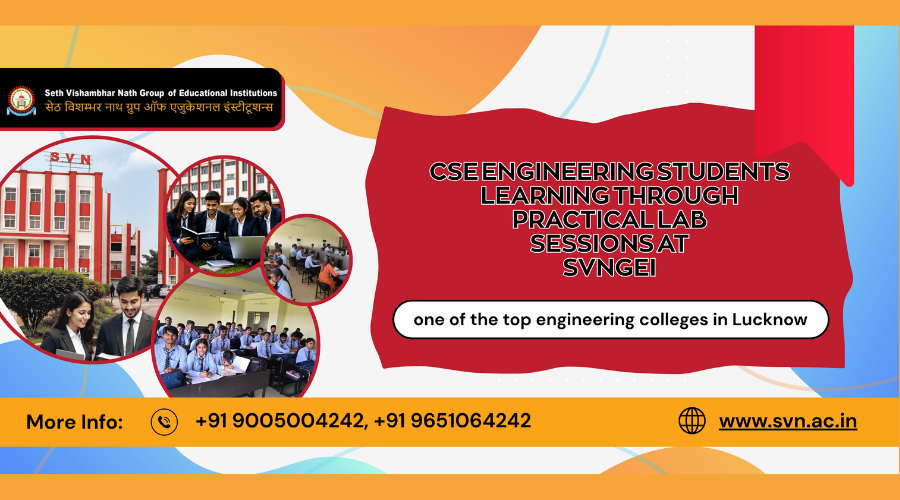
CSE Engineering Colleges in Lucknow: Technical Education and Practical Learning at SVNGEI
Choosing the right engineering college is an important decision for students interested in computer science, programming, and software development. CSE Engineering Colleges in Lucknow provide students with opportunities to pursue computer science education and develop technical knowledge. A suitable academic environment helps students understand complex concepts, improve logical thinking, and build a foundation for further education and professional development.
Computer Science and Engineering (CSE) combines programming, algorithms, computer networks, operating systems, and software engineering. Understanding these subjects helps students explore how computer systems function and how software applications are developed. Students should consider academic guidance, laboratory facilities, practical activities, and opportunities to apply classroom knowledge when selecting an institution.
Understanding Computer Science and Engineering
Computer Science and Engineering focuses on the principles and technologies used to develop and operate computer systems. The subject covers programming, data structures, algorithms, databases, operating systems, and software development. These areas help students understand how information is processed, stored, managed, and used in computing applications.
Programming introduces students to writing instructions that computers can execute. Data structures and algorithms help them organise information and develop solutions to computational problems. Computer networks explain how devices communicate, while operating systems provide an understanding of the software that manages computer resources.
Software engineering introduces methods used during software development, including planning, designing, testing, and maintaining applications. Studying these subjects helps students strengthen their technical understanding and develop a systematic approach to solving problems.
What to Consider When Choosing a CSE College
Students comparing engineering institutions should look beyond the course name and understand how the department supports academic learning. The curriculum, faculty guidance, computer laboratories, and practical assignments all contribute to the learning experience.
Students exploring the Best CSE Colleges in Lucknow should consider the following factors before making a decision:
- Academic curriculum: Review the subjects covered in the Computer Science and Engineering program and understand how they build technical knowledge.
- Faculty guidance: Academic support helps students clarify concepts and improve their understanding of difficult topics.
- Laboratory facilities: Computer laboratories allow students to practise programming, work with software tools, and apply classroom concepts.
- Project work: Technical projects encourage students to analyse problems, plan solutions, and apply their knowledge to practical tasks.
- Skill development: Programming practice, logical reasoning, teamwork, and communication support academic and professional growth.
- Research and industry interaction: Learning activities related to research and industry practices can help students understand different aspects of the technology field.
Reviewing these factors can help students make an informed choice based on their interests and educational goals.
Computer Science and Engineering at SVNGEI
Seth Vishambhar Nath Group of Educational Institutions (SVNGEI) offers a Computer Science and Engineering program through its Department of Computer Science and Engineering. The department’s teaching approach focuses on technical understanding, practical experience, clear concepts, curiosity, and continuous improvement.
The department aims to help students develop logical thinking, confidence, and innovative ideas. Classroom teaching is supported by laboratory learning and academic guidance, giving students opportunities to understand technical subjects and practise relevant skills.
The department’s educational objectives also emphasise problem-solving, professional responsibility, teamwork, and lifelong learning. These areas help students understand that engineering education involves more than learning programming languages. It also requires the ability to analyse problems, work with others, and continue developing technical knowledge.
Students can explore program information, faculty details, syllabus information, and laboratory facilities through the official department website:
Core Subjects in Computer Science and Engineering
The CSE program includes several subjects that contribute to a student’s understanding of computing systems and software development. Each subject introduces concepts that can be applied in practical exercises and technical projects.
Programming and Data Structures
Programming helps students learn how to write, test, and improve computer instructions. Languages such as C, C++, Java, and Python are used in different programming contexts. Regular practice helps students understand programming logic, identify errors, and develop organised solutions.
Data structures focus on storing and managing information efficiently. Students study concepts such as arrays, linked lists, stacks, queues, trees, and graphs. Understanding these structures helps them work with data and analyse different solutions.
Algorithms and Problem-Solving
Algorithms provide step-by-step methods for solving computational problems. Students learn to analyse a problem, identify possible approaches, and select suitable methods for reaching a solution. These concepts support the development of logical reasoning and systematic thinking.
Practising algorithms also helps students understand how different solutions perform. This knowledge is useful when designing programs that need to process information efficiently.
Database Management Systems
Database Management Systems (DBMS) focus on organising, storing, retrieving, and managing information. Students learn how databases support applications that require structured data. Practical exercises can help them understand database design, queries, and relationships between different data elements.
Database knowledge is an important part of software development because many applications depend on reliable data storage and retrieval.
Operating Systems and Computer Networks
Operating systems manage computer resources and provide the environment in which applications run. Studying this subject helps students understand processes, memory management, files, and other essential system functions.
Computer networks explain how computers and other devices exchange information. Learning networking concepts helps students understand communication systems and the technologies used to connect devices.
Software Engineering
Software engineering introduces structured approaches to developing and maintaining software. Students learn about requirements, system design, software testing, and development processes. These concepts help them understand how technical projects are planned and managed.
Together, these subjects provide a foundation for exploring different areas of computer science and developing practical computing skills.
Practical Learning and Laboratory Facilities
Practical learning is an important part of engineering education because it allows students to apply theoretical concepts. SVNGEI’s Department of Computer Science and Engineering describes laboratory facilities designed to support programming, software development, database learning, and project work.
The department lists several laboratories that support different areas of computer science.
- Python Programming Lab: Supports learning programming concepts, syntax, and techniques through practical exercises.
- Data Structure Lab: Helps students practise implementing and analysing data structures and algorithms.
- Software Engineering Lab: Introduces software development processes, modelling, and software testing concepts.
- Database Management System Lab: Supports learning database design, data management, and database-related practical tasks.
- Operating Systems Lab: Helps students explore operating system functions and understand how computer resources are managed.
- Data Warehousing and Data Mining Lab: Introduces methods for organising data and exploring patterns in datasets.
- Project Lab: Provides opportunities to apply theoretical and practical knowledge while working on technical projects.
The department also lists facilities for Artificial Intelligence and Machine Learning and Deep Learning. Students can refer to the official department page for current program information and laboratory details.
Practical exercises help students connect classroom learning with computer-based tasks. By writing programs, testing solutions, working with databases, and completing assignments, students can identify areas that need improvement and strengthen their understanding of technical concepts.
The Importance of Project Work
Project work gives students an opportunity to apply what they learn in their subjects. Instead of studying concepts only in theory, students can use programming, database management, and software development techniques to work towards a defined objective.
A project generally involves understanding a problem, planning a solution, selecting suitable tools, developing the application, and testing the results. This process encourages students to think carefully about requirements and review their work before considering it complete.
Project activities can also help students practise teamwork, communication, and time management. When students discuss ideas, divide responsibilities, and review their progress, they gain experience in organising technical work.
The Department of Computer Science and Engineering at SVNGEI identifies project-based learning and practical application as important parts of its educational approach. Such activities support the development of problem-solving abilities and encourage students to explore their own ideas.
Developing Professional and Technical Skills
Computer Science and Engineering students need both subject knowledge and professional skills. Programming and technical concepts provide the foundation for working with computing systems, while communication and teamwork help students explain ideas and collaborate effectively.
The department’s stated educational objectives include developing professional skills, ethical responsibility, entrepreneurship, and a commitment to lifelong learning. These objectives reflect the importance of preparing students to continue learning as technologies and professional requirements change.
Students can work towards these skills by participating in classroom discussions, completing practical assignments, preparing project presentations, and seeking academic guidance when needed. Regular practice also helps students recognise their strengths and identify subjects that require additional attention.
A balanced approach to technical and professional development can help students prepare for further study and different responsibilities in the technology field.
Career Opportunities After Computer Science Engineering
Computer Science and Engineering provides a foundation for exploring several areas of technology. Career options depend on a student’s knowledge, practical abilities, interests, and further skill development.
Some areas related to computer science include:
- Software development: Working on the design, development, testing, and maintenance of software applications.
- Data analysis: Organising and examining data to identify useful information and patterns.
- Cybersecurity: Studying methods used to protect computer systems, networks, and information.
- Database management: Supporting the organisation and maintenance of data systems.
- System design: Understanding how software and computing components work together.
- Research and higher education: Continuing academic study or exploring research in computer science and related fields.
Students researching the Top Computer Science Colleges in Lucknow should also consider how their chosen program supports technical learning, practical experience, and long-term academic goals. The department’s stated program educational objectives identify software development, data analysis, and cybersecurity among the career areas related to computer science.
Students should remember that career preparation requires consistent learning, practical experience, and the development of relevant skills. Completing a degree provides an academic foundation, while continued practice helps students prepare for the responsibilities associated with specific roles.
Conclusion
Selecting from CSE Engineering Colleges in Lucknow requires careful consideration of the curriculum, faculty guidance, practical learning, laboratory facilities, and opportunities for technical development. Students should review these aspects to understand how an institution supports their academic interests and learning goals.
Seth Vishambhar Nath Group of Educational Institutions (SVNGEI) offers Computer Science and Engineering education with an emphasis on technical understanding, laboratory practice, project work, logical thinking, and academic guidance. Its department provides information about core computing subjects, laboratory facilities, and educational objectives through its official website.
Students interested in computer science can explore the department’s details to learn more about its program and educational approach before making an informed decision about their engineering studies.
Frequently Asked Questions
Students should consider the curriculum, faculty guidance, computer laboratory facilities, practical learning opportunities, project work, and the department’s educational objectives before selecting a college.
Computer Science and Engineering covers programming, data structures, algorithms, database management systems, operating systems, computer networks, and software engineering.
Yes, Seth Vishambhar Nath Group of Educational Institutions (SVNGEI) offers a B.Tech program in Computer Science and Engineering through its Department of Computer Science and Engineering.
Practical learning helps students apply theoretical concepts through programming exercises, laboratory assignments, database activities, and technical projects. It also supports problem-solving and logical thinking.
Students can explore areas such as software development, data analysis, cybersecurity, database management, and further studies in computer science, depending on their interests and skills.