

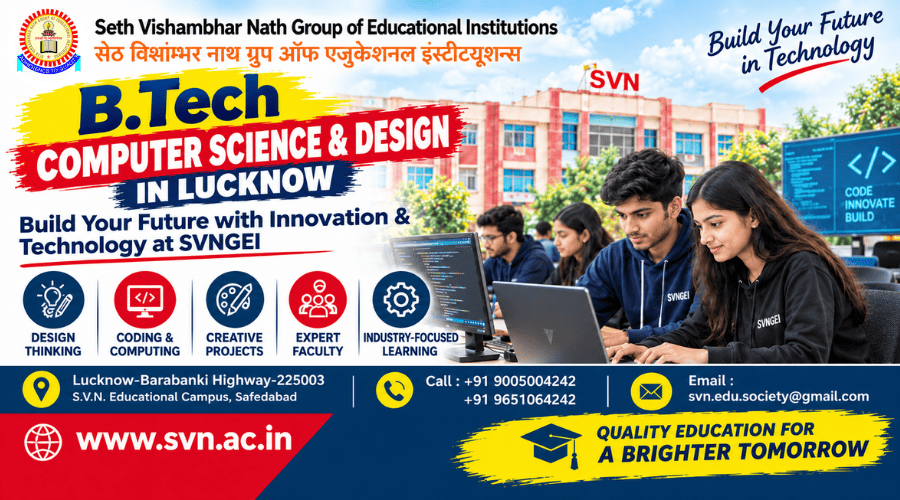
B.Tech. - Computer Science and Design: Course Overview, Practical Learning and Technical Skills
Technology and design are closely connected in the development of digital products and computer-based solutions. Students interested in both areas can explore B.Tech. – Computer Science and Design, a program that combines computing knowledge with design thinking. It focuses on understanding technical concepts, developing creative ideas, and considering user needs while working on digital solutions.
Seth Vishambhar Nath Group of Educational Institutions (SVNGEI), through its Department of Computer Science and Engineering, focuses on technical understanding, practical experience, teaching methods, and academic guidance. Students are encouraged to develop logical thinking, strengthen their understanding of concepts, and continue improving their technical abilities.
For students exploring B.Tech Computer Science and Design in Lucknow, understanding the course areas, practical learning facilities, and academic environment can help them make an informed decision about their education.
Understanding Computer Science and Design
Computer Science and Design brings together computer science principles and design-oriented thinking. Computer science focuses on computing concepts and technical problem-solving, while design thinking encourages students to consider how people interact with digital products and systems.
The program combines these areas to support the development of user-focused digital solutions. Its key learning areas include UI/UX design, product development, human-computer interaction, and creative problem-solving.
These subjects help students understand the relationship between the technical functioning of a product and the experience of the person using it. Developing a digital product involves more than making its features work. It also requires attention to how users navigate the product and interact with its functions.
By studying computing and design together, students can develop a broader understanding of digital solutions. This approach brings technical knowledge and creative thinking into the same learning process.
What Students Can Learn Through the Program
The program focuses on different areas of computer science and design. Each area contributes to students’ understanding of technology and digital product development.
1. UI/UX Design
User interface and user experience design focus on how people interact with digital products. UI/UX design helps students consider the presentation, usability, and overall experience of a digital interface.
Understanding this area encourages learners to consider user requirements while working on the technical aspects of a product. It also introduces the relationship between design decisions and the way people use digital systems.
2. Product Development
Product development involves understanding the process of creating digital products and considering their intended purpose. Students can explore how technical concepts and design decisions contribute to developing a solution.
This area connects computing knowledge with the broader process of developing a product. It encourages students to consider the purpose of a solution and how its different elements work together.
3. Human-Computer Interaction
Human-computer interaction focuses on the relationship between people and computer systems. It helps learners understand how users interact with technology and why usability matters when developing digital solutions.
Studying this area supports a user-focused approach to technical problem-solving. It also connects design principles with the functioning of computer-based systems.
4. Creative Problem-Solving
Creative problem-solving involves examining challenges, considering different approaches, and developing suitable solutions. In computer science and design, students need to combine logical thinking with creativity.
This approach supports analytical abilities and encourages learners to look at technical challenges from different perspectives. It also helps them understand how design thinking can contribute to digital solutions.
The Importance of Practical Learning
Practical experience plays an important role in engineering education. Classroom learning helps students understand concepts, while practical activities provide opportunities to apply that knowledge and examine how technical principles work.
The Department of Computer Science and Engineering at SVNGEI supports practical exposure, research activities, and interaction with industry practices. Faculty members guide students through academic learning and support laboratory activities.
Practical learning encourages students to examine problems carefully, test their ideas, and strengthen their understanding of computing concepts. Project work also helps learners organise their ideas, understand task requirements, and consider how different components contribute to a final solution.
For students interested in computer science and design, practical activities are particularly relevant because digital solutions involve both technical functionality and user requirements. Understanding these elements together helps learners approach projects with greater clarity.
Computer Science Laboratory Facilities at SVNGEI
The Department of Computer Science and Engineering provides laboratory facilities to support practical learning and project development. The department’s laboratories include facilities for programming, software development, databases, operating systems, and other computing subjects.
The department lists several laboratories that support different aspects of computer science education.
- Software Engineering Lab: Supports learning about software development stages, software models, testing, and software quality.
- Python Programming Lab: Helps students understand programming concepts, syntax, and techniques using Python.
- Data Structure Lab: Provides practical experience with data structures, algorithms, sorting, searching, and data-handling techniques.
- Data Warehousing and Data Mining Lab: Introduces data warehousing concepts and techniques for analysing data.
- Operating Systems Lab: Supports the study of operating system principles and their functioning.
- Database Management System Lab: Helps students understand database design, creation, and management.
- Project Lab: Provides facilities for applying theoretical and practical knowledge through project work.
- Artificial Intelligence and Machine Learning Lab: Supports practical learning involving AI and machine learning concepts.
- Deep Learning Lab: Focuses on the implementation and evaluation of deep learning models.
These facilities support different areas of computing education and give students opportunities to practise technical concepts. Programming, data handling, software development, and project work can help learners develop a structured approach to technical challenges.
Academic Guidance and Faculty Support
Faculty guidance is an important part of the learning process. Students often need support when understanding technical subjects, completing practical exercises, and applying classroom knowledge to projects.
At SVNGEI, the Department of Computer Science and Engineering focuses on academic mentoring and practical learning. Faculty members support students in understanding concepts and encourage teaching approaches that make classroom learning more effective. Seminars, workshops, and conferences also form part of the department’s academic activities.
Guidance can help students identify areas where they need further practice and improve their understanding over time. It also supports a disciplined approach to learning.
For a program combining computing and design, academic support can help students understand both the technical and creative aspects of their work. Clear concepts provide a foundation for applying knowledge, while practical activities encourage learners to examine how different ideas can be used together.
Developing Problem-Solving and Teamwork Skills
Engineering education involves more than understanding technical subjects. Students also need to develop the ability to analyse problems, communicate ideas, and work with others.
The department’s educational objectives include developing problem-solving skills, leadership qualities, teamwork, and ethical responsibilities. It also emphasises interaction with industry practices and awareness of emerging tools and technologies.
Problem-solving helps learners examine a challenge and consider possible solutions. Teamwork encourages them to share ideas, understand different viewpoints, and contribute to a common task. Communication supports the clear presentation of technical information and project decisions.
Developing these skills alongside subject knowledge can help students approach academic projects more effectively. It also encourages professional responsibility and a willingness to continue learning as technology changes.
Research, Innovation and Industry Interaction
Research and innovation encourage students to explore ideas, examine problems, and develop a deeper understanding of technical subjects. The Department of Computer Science and Engineering promotes research activities and interaction with industry practices as part of its educational approach.
The department also identifies technical skills, professional responsibilities, entrepreneurship, and lifelong learning among its educational objectives.
For students interested in computer science and design, research provides a broader context for learning. It encourages careful investigation, while project work gives students opportunities to apply their knowledge.
Industry interaction can help students become more aware of technical practices and changing requirements. Learning about tools and technologies also encourages them to continue developing their understanding beyond individual classroom topics.
Innovation involves identifying a problem, examining possible approaches, and considering whether a proposed solution addresses the intended need. Combining computing knowledge with design thinking can help students approach this process from technical and user-focused perspectives.
Choosing an Engineering College in Lucknow
When comparing Engineering colleges near Lucknow, students can consider the subjects offered, laboratory facilities, teaching approach, academic guidance, and opportunities for practical learning. Reviewing these aspects can help them understand how an institution supports their chosen field of study.
Students interested in computer science and design can pay particular attention to computing laboratories, project-based activities, and the learning areas included in the program. These details help them assess whether the academic environment matches their interests.
The Department of Computer Science and Engineering at SVNGEI focuses on technical understanding, practical exposure, academic mentoring, research activities, and industry interaction. Its laboratory facilities support several computing subjects, while its educational objectives include problem-solving, teamwork, and lifelong learning.
Before making a final decision, students should review the official course information and confirm the details relevant to their academic plans.
Understanding Computer Science and Design Course Fees in Lucknow
Students researching Computer Science and Design course fees in Lucknow should review the official fee information provided by the institution. Course fees are an important part of planning for higher education, so students should check the applicable amount and any relevant payment details directly with the college.
Along with fees, it is useful to understand the subjects covered, practical learning facilities, academic support, and overall course structure. Reviewing these details together helps students compare their options according to their educational needs.
For accurate information about the course fee at SVNGEI, students should consult the institute’s official website or contact the institution directly. No specific fee amount is stated here because verified course-fee details have not been provided.
Building a Foundation for Further Learning
Computer science and design include areas that continue to develop alongside technology. Students benefit from building a clear understanding of fundamental concepts and maintaining an interest in learning new approaches.
Programming, software development, data structures, database concepts, and operating systems are among the computing areas represented in the department’s laboratory facilities. Design-focused learning adds consideration of user interaction, product development, and creative problem-solving.
A foundation in these areas can support continued academic learning and help students understand connections between different technical subjects. Project work encourages the application of knowledge, while academic guidance can help students address areas that require further attention.
The department also highlights lifelong learning as an educational objective. This reflects the importance of continuing to develop technical knowledge and professional skills as tools, methods, and technologies change.
Students can use their academic experience to identify their interests, strengthen their understanding of relevant subjects, and make informed decisions about their future learning.
Conclusion
B.Tech. – Computer Science and Design combines computing knowledge with design thinking, user interaction, product development, and creative problem-solving. This interdisciplinary approach can be relevant for students interested in understanding both the technical and user-focused aspects of digital solutions.
Seth Vishambhar Nath Group of Educational Institutions (SVNGEI), through its Department of Computer Science and Engineering, focuses on structured teaching, practical exposure, laboratory learning, academic guidance, research activities, and industry interaction. The department also emphasises problem-solving, teamwork, ethical responsibilities, and lifelong learning.
Students exploring this program can review its learning areas, laboratory facilities, and academic environment to determine whether it matches their interests. Checking official course details and fee information can further help them make an informed decision about their education.
Frequently Asked Questions
B.Tech. – Computer Science and Design combines computing knowledge with design thinking. It covers areas such as UI/UX design, product development, human-computer interaction, and creative problem-solving.
The department’s computing laboratory areas include programming, software development, data structures, database management systems, operating systems, artificial intelligence, and machine learning. Design-related learning includes UI/UX design and human-computer interaction.
The Department of Computer Science and Engineering at SVNGEI provides laboratory facilities and supports practical learning and project work to help students understand computing concepts.
Students can compare course information, laboratory facilities, teaching approaches, academic guidance, practical learning opportunities, and official fee details before selecting an institution.
Students should consult the institution’s official website or contact its admissions office for accurate and current course-fee details.