

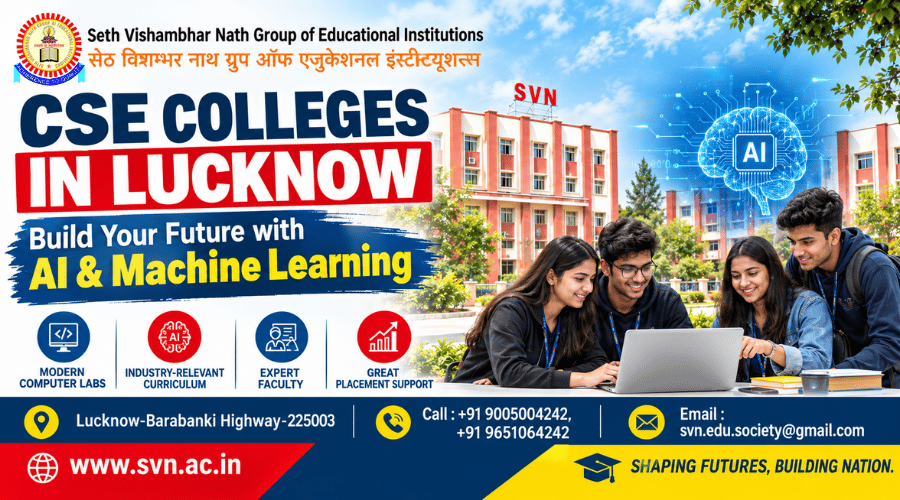
Engineering Collages in Lucknow – Building Technical and Practical Skills
Choosing the right institution for technical education is an important decision for students who want to develop strong subject knowledge along with practical abilities. Engineering Collages in Lucknow provide opportunities to learn technical subjects through classroom education, laboratory activities, projects, and academic guidance. A structured learning environment can help students understand concepts clearly while developing logical thinking, problem-solving abilities, technical confidence, and professional skills.
The Department of Computer Science and Engineering at Seth Vishambhar Nath Group of Educational Institutions (SVNGEI) focuses on technical understanding, practical exposure, faculty guidance, and skill development. The department encourages students to develop clarity of concepts, curiosity, continuous improvement, innovative thinking, and confidence through academic and practical learning.
Explore Computer Science and Engineering at SVNGEI
Computer Science and Engineering provides students with knowledge of important computing concepts and technical subjects. The field includes programming, data structures, algorithms, computer networks, operating systems, software engineering, and other areas that support an understanding of computer-based systems.
For students comparing CSE Collages in Lucknow, academic structure, practical facilities, faculty guidance, and opportunities for technical learning are important considerations. At Seth Vishambhar Nath Group of Educational Institutions (SVNGEI), the Department of Computer Science and Engineering combines classroom education with practical learning. Faculty members provide academic guidance and mentoring while students receive opportunities to apply their knowledge through laboratory activities and projects.
The department focuses on developing several important abilities among students, including:
- Logical thinking and problem-solving abilities
- Technical understanding and innovative thinking
- Leadership qualities
- Team spirit
- Communication and professional skills
- Professional and social responsibility
- Ethical values
- Lifelong learning
This approach helps students work on their technical knowledge while also developing skills that can support their academic and professional growth.
Build a Strong Foundation in Computer Science
The Computer Science and Engineering program provides students with a foundation in several core areas of computing. Understanding these subjects helps students develop technical knowledge and a logical approach toward solving computing-related problems.
Important areas include:
- Programming
- Data structures
- Algorithms
- Computer networks
- Operating systems
- Software engineering
Programming introduces students to computational concepts and software development. Data structures and algorithms help strengthen logical reasoning and problem-solving abilities. Computer networks provide knowledge about communication between computer systems, while operating systems introduce students to the functioning and management of computer resources.
Software engineering provides an understanding of systematic approaches to software development. Together, these areas provide students with a foundation for learning related to software development, system design, research, and higher education.
Learn Artificial Intelligence And Machine Learning
The department also provides B.Tech. learning in Computer Science and Engineering with Artificial Intelligence & Machine Learning. This specialized program focuses on areas connected with advanced computing and intelligent systems. The curriculum includes data analytics, deep learning, natural language processing, and intelligent systems.
Students interested in Artificial Intelligence And Machine Learning can develop knowledge through classroom education as well as practical laboratory activities. The combination of core computing subjects and specialized technical areas gives learners an opportunity to understand how data, algorithms, and intelligent systems are connected.
Important learning areas include:
- Data analytics
- Artificial intelligence
- Machine learning
- Deep learning
- Natural language processing
- Intelligent systems
These areas support technical understanding and allow students to explore advanced computing concepts. Practical activities further help learners connect theoretical knowledge with technical applications.
Gain Practical Experience Through Laboratories
Practical education is an important part of technical learning because it allows students to apply concepts studied in classrooms. Laboratory sessions provide opportunities to work with technical subjects and understand their practical applications.
The department has laboratories covering areas such as Software Engineering, Python Programming, Data Structures, Data Warehousing and Data Mining, Operating Systems, Database Management Systems, Project Work, Artificial Intelligence & Machine Learning, and Deep Learning.
These facilities support hands-on learning in programming, databases, data analysis, software concepts, artificial intelligence, and other technical areas.
Programming exercises can help students strengthen their coding knowledge, while database activities provide practical understanding of data management. Data warehousing and data mining activities introduce students to working with and analyzing information.
The department states that its computer laboratories have around 90 computers connected through a 100 Mbps internet connection and provide 24-hour Wi-Fi connectivity.
Develop Programming and Technical Skills
Programming is an important part of computer science education. Students can develop knowledge of programming concepts through classroom teaching and laboratory activities. The department provides practical exposure to areas involving C, C++, Python, Java, SQL, and related technical subjects.
Programming practice can help students improve computational thinking and develop logical approaches to solving technical problems. Practical exercises also give students opportunities to understand how programming concepts can be applied while working on projects and academic activities.
Along with programming, students can study database management, data warehousing, data mining, operating systems, networks, software engineering, artificial intelligence, and machine learning.
Learning these subjects together provides a broader understanding of computer systems and technical applications. It also allows students to connect different areas of computing during practical and project-based activities.
Explore AI-Focused Technical Learning
Students searching for an AI Engineering Collages in Lucknow option can consider the academic and practical structure available for specialized computing education. The AI and ML program at SVNGEI focuses on advanced areas such as data analytics, deep learning, natural language processing, and intelligent systems.
An AI Course in lucknow can provide students with exposure to concepts related to artificial intelligence, machine learning, data analysis, and intelligent applications. At SVNGEI, this learning is supported through dedicated laboratory facilities where students can work on data analysis, model development, training, testing, and evaluation of AI and ML algorithms.
The AI & ML laboratory also provides exposure to supervised and unsupervised learning techniques, neural networks, deep learning models, and data-driven problem-solving approaches.
Learn Through Faculty Guidance and Mentoring
Faculty guidance is an important part of academic learning. Teachers and mentors help students understand technical subjects, clarify concepts, and improve their academic knowledge.
The department has faculty expertise across different technical areas, including:
- Cloud computing
- Data science
- C and C++
- Python
- Artificial intelligence
- Database management
- Web technology
- Big data
- Software engineering
- Operating systems
- Computer networks
- Data warehousing and data mining
- Information security
- AI, ML, and deep learning
- Internet of Things
- Embedded systems
- Cybersecurity
This range of technical areas provides students with opportunities to understand different concepts connected with computer science and technology. Faculty mentoring also supports academic activities and helps students develop a clearer understanding of technical subjects through regular learning and guidance.
Strengthen Learning Through Projects
Project-based learning provides students with opportunities to apply their academic knowledge to practical tasks. It allows them to work with technical concepts in a structured way and understand how different subjects connect with one another.
Students can use programming, database concepts, data analysis, software knowledge, and other technical skills while working on projects. This type of activity can also support the development of problem-solving, logical thinking, teamwork, and technical confidence.
The Project Lab provides a platform for students to apply theoretical and practical knowledge while working on project activities. It is designed to encourage creativity, innovation, and problem-solving through technical work.
Participate in Workshops, Seminars and Research Activities
Technical education also includes activities beyond regular classroom teaching. Workshops, seminars, research activities, and institute-industry interaction provide students with additional academic and practical exposure.
Workshops and seminars give students opportunities to engage with technical subjects and participate in academic activities. Research activities can encourage students to explore concepts in greater detail and develop an interest in technical learning.
Institute-industry interaction provides exposure to professional practices and technical requirements. These activities can support the development of communication, teamwork, leadership, problem-solving, and professional responsibility.
The department encourages faculty members and students to participate in seminars, workshops, conferences, research, and activities related to emerging technologies.
Focus on Professional and Personal Development
Technical education is not limited to subject knowledge. Students also need communication skills, teamwork, leadership qualities, professional responsibility, ethical values, and the ability to continue learning.
The department focuses on several areas of student development:
- Technical knowledge
- Practical skills
- Problem-solving abilities
- Leadership
- Team spirit
- Communication
- Professional responsibility
- Ethical values
- Lifelong learning
Developing these qualities alongside technical education can help students become more confident in handling academic tasks and professional responsibilities.
The learning environment encourages students to improve continuously and develop an understanding of both technical and professional expectations.
Prepare for Further Academic Learning
Computer Science and Engineering provides a foundation for students interested in software development, system design, research, and higher education. Students can continue developing their knowledge through academic studies, practical activities, projects, and technical learning.
Those interested in Artificial Intelligence and Machine Learning can explore areas such as data analytics, deep learning, natural language processing, and intelligent systems. These subjects provide opportunities to understand advanced computing concepts and work with specialized technical areas.
The department also emphasizes lifelong learning and adaptability. Students can continue building their technical knowledge as they progress through their academic journey.
A Structured Approach to Technical Education
A structured approach to technical education combines classroom learning, laboratory practice, faculty guidance, projects, and academic activities. Each area contributes to the overall learning experience.
Classroom sessions help students understand theoretical concepts. Laboratories provide opportunities to apply those concepts. Projects encourage practical application, while faculty mentoring provides academic support. Workshops, seminars, research activities, and industry interaction add further exposure.
At Seth Vishambhar Nath Group of Educational Institutions (SVNGEI), these elements contribute to a learning environment focused on technical understanding and practical experience.
Students are encouraged to develop their knowledge while improving problem-solving abilities, communication, teamwork, leadership, and professional responsibility.
Conclusion
Selecting an institution for technical education involves considering academic learning, practical exposure, laboratory facilities, faculty guidance, projects, and opportunities for skill development. The Department of Computer Science and Engineering at Seth Vishambhar Nath Group of Educational Institutions (SVNGEI) focuses on these areas through classroom education, laboratory learning, project activities, research, workshops, seminars, and faculty mentoring.
The Computer Science and Engineering program provides knowledge of core areas such as programming, data structures, algorithms, computer networks, operating systems, and software engineering. The specialized Artificial Intelligence & Machine Learning program provides learning in data analytics, deep learning, natural language processing, and intelligent systems.
Through practical learning and academic guidance, students can develop technical knowledge, problem-solving abilities, teamwork, communication skills, professional responsibility, and ethical values. This structured learning approach provides students with a strong foundation for further academic learning and professional development.
Frequently Asked Questions
The program covers important areas such as programming, data structures, algorithms, computer networks, operating systems, and software engineering.
Yes. The department provides laboratories for software engineering, Python programming, data structures, data warehousing and data mining, operating systems, database management systems, project work, artificial intelligence and machine learning, and deep learning.
The specialized program includes areas such as data analytics, deep learning, natural language processing, artificial intelligence, machine learning, and intelligent systems.
Practical learning allows students to apply classroom concepts through programming exercises, laboratory activities, database work, data-related activities, and projects.
Seth Vishambhar Nath Group of Educational Institutions (SVNGEI) focuses on classroom learning, faculty guidance, mentoring, practical laboratory exposure, projects, workshops, seminars, research activities, and technical skill development.