

Admission Open 2026-27 | Department of Civil Engineering for Future-Focused Learning and Career Growth
The announcement of Admission Open 2026-27 | Department of Civil Engineering brings an important opportunity for students who are planning to build a strong and stable career in the engineering field. Civil engineering is one of the most essential branches of engineering that focuses on designing, constructing, and maintaining infrastructure. It plays a major role in shaping modern society, as every physical structure around us depends on the work of skilled civil engineers.
From residential buildings to highways, bridges, and water systems, civil engineering is involved in every stage of development. This makes it a practical and impactful field where students can apply their knowledge in real-world situations. Students who are planning their academic journey often explore options like civil engineering colleges in Lucknow to find an institution that provides quality education, structured learning, and a supportive environment.
Choosing the right institution at the beginning of the journey is very important. It not only influences academic performance but also shapes future opportunities. A strong start helps students build confidence and develop a clear understanding of concepts, which is essential for long-term success.
Understanding the Role of Civil Engineering in Modern Development
Civil engineering plays a central role in infrastructure development and urban planning. It is responsible for designing and maintaining structures that support daily life. Without proper infrastructure, development cannot take place effectively. Civil engineers ensure that buildings are safe, roads are durable, and water systems function efficiently.
The field is constantly evolving with new technologies and methods. Modern civil engineering also focuses on sustainability, environmental protection, and efficient resource management. This makes it a dynamic and continuously growing field. Students who choose civil engineering are not only learning technical concepts but also contributing to the development of society.
As infrastructure projects continue to grow, the demand for skilled professionals is increasing. This makes civil engineering a reliable and future-oriented career choice for students.
Exploring Academic Opportunities in Civil Engineering
Civil engineering education is designed to provide a balance between theoretical knowledge and practical application. Students are introduced to core subjects that help them understand the principles behind construction and design.
Many students prefer to study in best civil engineering colleges in Lucknow where they can access well-structured programs and proper academic guidance. These institutions focus on building strong fundamentals and providing exposure to real-world applications.
The academic journey includes subjects like engineering mechanics, fluid mechanics, structural analysis, geotechnical engineering, and environmental engineering. Each subject plays a key role in developing a complete understanding of the field. Students gradually learn how to apply these concepts in real-life projects.
Importance of Structured Curriculum in Engineering Education
A structured curriculum is essential for effective learning in civil engineering. It ensures that students are introduced to concepts in a logical and progressive manner. Starting with basic principles and moving toward advanced topics helps in building clarity and confidence.
Subjects are designed in a way that they complement each other. For example, understanding material science helps in structural analysis, and knowledge of surveying supports construction planning. This interconnected learning approach improves understanding and retention.
A well-planned curriculum also includes regular assessments, practical sessions, and project work. This ensures that students are not only learning concepts but also applying them effectively.
Role of Practical Learning and Hands-On Experience
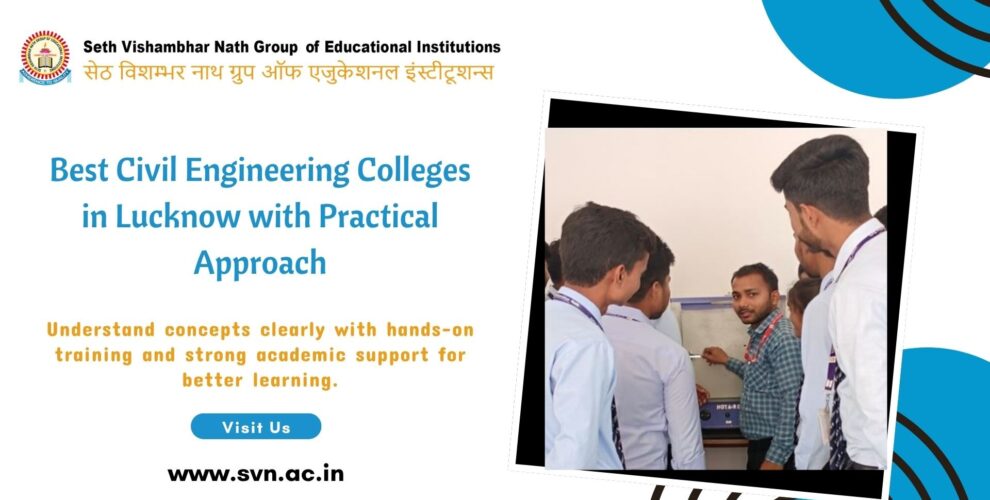
Practical learning is one of the most important aspects of civil engineering education. Classroom knowledge provides the foundation, but hands-on experience helps students understand how concepts are applied in real-world situations.
Laboratory work, field visits, and project-based learning give students the opportunity to work on real-life scenarios. This improves technical skills and builds confidence. Students learn how to handle tools, materials, and site conditions, which prepares them for future challenges.
Many students also explore options like Diploma in Civil Engineering Colleges in Lucknow to gain early exposure to technical education. These programs help in understanding the basics and building interest in the field. Practical experience plays a key role in shaping a student’s overall development.
About SVNGEI and Its Academic Approach
Seth Vishambhar Nath Group of Educational Institutions (SVNGEI) provides quality education with a focus on structured learning and student development. The institution offers a supportive environment where students can improve their knowledge step by step.
With experienced faculty and a practical approach to teaching, SVNGEI ensures that students gain clarity in concepts and develop confidence. The focus is on both academic learning and overall development, helping students prepare for future opportunities in civil engineering.
Importance of Faculty Guidance and Mentorship
Faculty members play a crucial role in guiding students throughout their academic journey. Their experience and knowledge help students understand complex concepts and overcome challenges.
Mentorship provides direction and motivation. It helps students identify their strengths and work on areas of improvement. Regular interaction between students and faculty creates a positive learning environment and encourages active participation.
Skill Development and Technical Growth
In addition to academic knowledge, skill development is equally important in civil engineering. Students need to develop analytical thinking, problem-solving abilities, and attention to detail.
Technical skills include understanding construction processes, using tools and software, and applying engineering principles. Communication and teamwork are also essential, as engineers often work on large projects with multiple teams.
Building a Strong Academic Foundation
A strong foundation is essential for long-term success in civil engineering. Students who focus on understanding basic concepts are better prepared for advanced topics and real-world applications.
This foundation also helps in adapting to new technologies and changes in the field. Continuous learning and practice ensure that students remain updated and relevant.
Consistency and Continuous Learning
Consistency plays an important role in achieving success in engineering education. Regular study and practice help students improve their understanding and performance.
Continuous learning is also important as the field keeps evolving. Students need to stay updated with new methods and technologies to remain competitive.
Career Opportunities in Civil Engineering
Civil engineering offers a wide range of career opportunities in various sectors such as construction, infrastructure development, project management, and environmental planning.
The field provides both stability and growth. Students can explore different career paths based on their interests and skills. With proper education and experience, they can build a successful and rewarding career.
Conclusion: Start Your Journey with the Right Choice
With Admission Open 2026-27 | Department of Civil Engineering, students have a valuable opportunity to begin their journey in a meaningful and growing field. A structured learning environment, practical exposure, and proper guidance are essential for success.
Choosing the right institution plays a crucial role in shaping the future. Seth Vishambhar Nath Group of Educational Institutions (SVNGEI) provides the support, environment, and academic approach needed for students to move forward with confidence and build a strong career in civil engineering.