

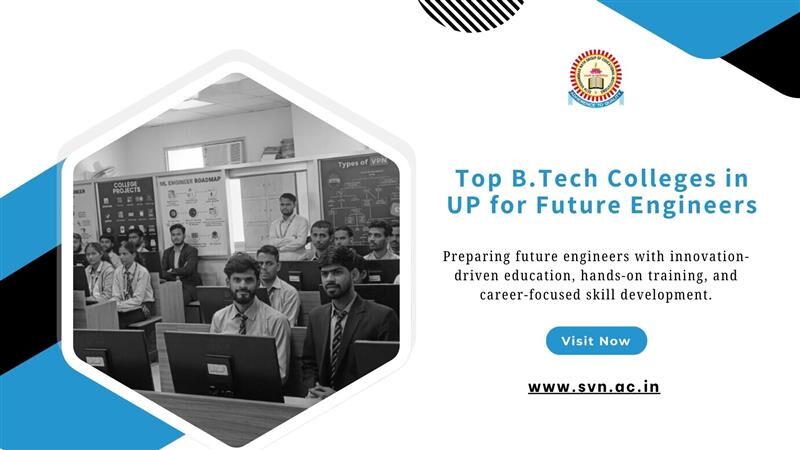
B Tech Colleges in UP: Empowering Future Engineers Through Quality Technical Education
Engineering has always been a foundation for innovation, industrial growth, and technological progress. Students searching for B Tech Colleges in Up usually aim to find institutions that provide academic excellence, practical exposure, and strong career-oriented learning. Uttar Pradesh has emerged as one of the most preferred states for engineering education due to its growing number of technical institutions, improving infrastructure, and focus on industry-aligned programs.
Over the years, engineering colleges in Uttar Pradesh have evolved to meet the changing requirements of global industries. These institutions emphasize not only theoretical understanding but also hands-on training, helping students develop skills that are relevant in real-world engineering environments.
Evolution of Engineering Education in Uttar Pradesh
Uttar Pradesh has seen remarkable development in technical education. The state has invested heavily in strengthening higher education systems, especially in the field of engineering. As a result, engineering institutions today focus on innovation, skill development, and applied learning.
Key reasons behind this growth include:
- Increasing demand for skilled engineers across industries
- Adoption of updated academic frameworks
- Strong emphasis on practical and project-based learning
- Availability of diverse engineering specializations
This growth has positioned Uttar Pradesh as a reliable destination for students aspiring to build careers in engineering and technology.
Academic Framework and Curriculum Design
The academic structure of engineering programs plays a crucial role in shaping a student’s technical foundation. Engineering curricula are designed to offer a balance between fundamental concepts and applied learning. Subjects are organized to ensure gradual skill development across semesters.
Engineering colleges focus on:
- Strong core subjects to build conceptual clarity
- Practical lab sessions to support theoretical learning
- Regular assessments to track academic progress
- Technical projects that encourage innovation and creativity
Institutions such as Seth Vishambhar Nath Group of Educational Institutions (SVNGEI) emphasize structured academic planning combined with continuous evaluation, ensuring that students remain focused and academically disciplined throughout their journey.
Faculty Expertise and Teaching Methodology
Experienced faculty members are the backbone of quality engineering education. Colleges recruit qualified educators with academic expertise and industry exposure. Teaching methodologies have shifted from traditional lecture-based approaches to interactive and application-oriented learning.
Modern teaching methods include:
- Concept-based lectures with real-world examples
- Interactive classroom discussions and problem-solving sessions
- Case studies and project-based learning
- Continuous mentoring and academic guidance
This approach enables students to understand complex engineering concepts more effectively and apply them confidently in practical situations.
Infrastructure and Campus Facilities
Infrastructure plays a vital role in enhancing the learning experience of engineering students. Colleges invest in modern facilities that support both academic and extracurricular development.
Common infrastructure facilities available at engineering institutions include:
- Well-equipped laboratories for various engineering disciplines
- Advanced computer labs with updated software
- Digital classrooms supporting smart learning tools
- Libraries with technical books, journals, and research materials
Such facilities allow students to experiment, explore, and strengthen their practical knowledge, which is essential for engineering education.
Industry Exposure and Practical Training
Engineering education becomes meaningful when students gain exposure to real industry practices. Colleges incorporate various training initiatives to bridge the gap between academics and industry requirements.
Industry-oriented learning is supported through:
- Internship and industrial training programs
- Industry visits and expert guest lectures
- Live projects based on real-world challenges
- Workshops on emerging technologies and tools
These experiences help students understand workplace expectations, industry trends, and professional responsibilities. Practical exposure also enhances employability by improving technical and problem-solving skills.
Skill Development and Holistic Growth
Apart from technical knowledge, engineering students must develop soft skills and professional attributes. Colleges focus on holistic development to prepare students for competitive professional environments.
Skill development initiatives include:
- Communication and presentation skill training
- Teamwork and leadership development activities
- Time management and professional ethics sessions
- Participation in technical events and competitions
Such initiatives help students build confidence, adaptability, and decision-making abilities, which are essential for long-term career success.
Career Opportunities After Engineering
Graduates from reputed engineering institutions find opportunities across diverse sectors. Engineering education opens doors to both employment and higher studies.
Career paths commonly pursued by engineering graduates include:
- Employment in IT, manufacturing, and construction industries
- Roles in research and development organizations
- Higher education and specialized technical courses
- Entrepreneurial ventures and startups
Colleges also provide career guidance and placement support to help students transition smoothly from academics to professional life.
Choosing the Right Engineering College
Selecting the right institution is a critical step for engineering aspirants. Students should evaluate colleges based on academic quality, infrastructure, faculty expertise, and industry exposure.
Important factors to consider include:
- Reputation and academic consistency
- Quality of teaching and learning resources
- Focus on practical and industry-oriented education
- Student support systems and career guidance
Students exploring b tech colleges in up should choose institutions that offer a student-centric learning environment, ethical academic practices, and continuous improvement in education quality.
Conclusion
Engineering education in Uttar Pradesh has grown significantly, offering students access to quality academic programs, modern infrastructure, and industry-focused training. With its structured academic approach, experienced faculty, and emphasis on practical learning, engineering education in the state continues to shape skilled professionals for the future.
For students seeking reliable B Tech Colleges in Up, institutions like Seth Vishambhar Nath Group of Educational Institutions (SVNGEI) provide an environment that supports academic excellence, technical growth, and holistic development. Choosing the right engineering college lays the foundation for a successful and fulfilling engineering career.