

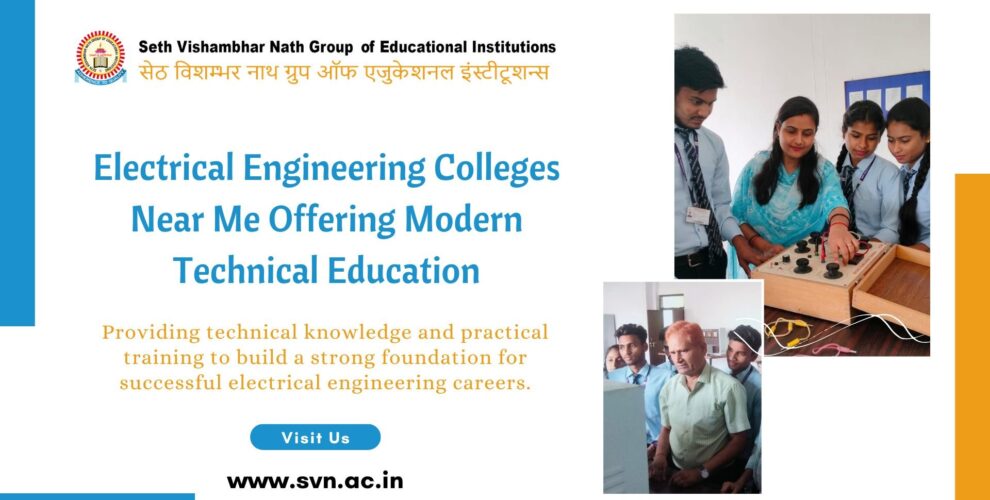
Finding the Right Electrical Engineering Colleges Near Me for Quality Technical Education
B. Tech Electrical engineering is one of the most important branches of engineering that supports the modern world. From electricity generation to transportation systems, automation technology, and communication networks, electrical engineers play an essential role in maintaining and improving the systems that power daily life. Because of the wide range of opportunities in this field, many students begin their academic search by looking online for electrical engineering colleges near me that can offer strong technical education and practical learning opportunities.
Choosing the right college is one of the most important decisions for students interested in engineering. A well-structured institution provides not only classroom learning but also practical training, laboratory exposure, and academic guidance that help students understand complex engineering concepts. These elements are essential for building a solid foundation in electrical engineering.
Students who carefully evaluate different institutions are more likely to choose colleges that focus on quality education, disciplined academic programs, and technical skill development. Engineering education requires commitment and curiosity, and the right learning environment helps students grow academically and professionally.
A strong educational institution encourages students to develop problem-solving abilities, analytical thinking, and technical understanding. These qualities help engineering graduates adapt to different professional environments and handle technical challenges effectively.
Understanding the Field of Electrical Engineering
B.Tech Electrical engineering focuses on the study and application of electricity, electronics, and electromagnetism. Engineers in this field design systems that generate, transmit, and distribute electrical power safely and efficiently. They also work with advanced technologies that support modern industries and infrastructure.
Students who pursue electrical engineering study several technical subjects that help them understand how electrical systems operate. These subjects create a strong academic foundation that prepares students for professional responsibilities in engineering.
Some important areas of study include:
- Electrical circuits and network analysis
- Electrical machines and transformers
- Power generation and distribution systems
- Control systems and automation
- Industrial electrical equipment
- Electrical safety and protection systems
These subjects help students understand how electrical energy is produced and used in industries, homes, and infrastructure systems. Through a combination of theoretical study and practical experiments, students learn how to design and maintain electrical systems effectively.
Because of the importance of these systems in everyday life, electrical engineers continue to play a significant role in technological development and industrial progress.
Importance of Choosing the Right Engineering College
Selecting the right engineering college is a critical step for students who want to pursue a successful career in electrical engineering. While researching electrical engineering colleges near me, students should evaluate several factors that influence the quality of education they will receive.
A good engineering institution provides a balanced academic environment that combines theoretical knowledge with practical training. This approach helps students understand engineering concepts and apply them in real-world situations.
Important factors to consider when selecting a college include:
- Qualified and experienced faculty members
- Well-equipped laboratories and technical facilities
- Structured academic curriculum
- Opportunities for practical experiments and projects
- Supportive learning environment
- Focus on discipline and technical development
Students who choose institutions with these qualities are more likely to gain a comprehensive engineering education. Such environments encourage curiosity, creativity, and innovation among students.
A well-planned educational structure also helps students build confidence in their abilities and prepare for professional challenges.
Electrical Engineering Education at SVNGEI
Seth Vishambhar Nath Group of Educational Institutions (SVNGEI) focuses on providing structured technical education designed to support academic learning and professional development. The institution aims to create a learning environment where students can build strong foundations in engineering concepts and technical skills.
The electrical engineering department at SVNGEI emphasizes both theoretical understanding and practical application. Students are guided by experienced faculty members who help them understand the principles of electrical systems and their applications in modern industries.
The educational approach at SVNGEI focuses on:
- Strong academic discipline
- Structured engineering programs
- Practical laboratory training
- Faculty mentorship and guidance
- Technical knowledge development
These elements help students develop analytical thinking and problem-solving abilities that are essential for engineering careers.
Students who are exploring electrical engineering colleges near me often prefer institutions that offer balanced education combining academic learning and practical experience.
Importance of Practical Learning
Practical learning is an essential component of electrical engineering education. While theoretical knowledge helps students understand engineering concepts, hands-on experience allows them to see how these concepts work in real situations.
Laboratory sessions play a crucial role in helping students develop technical skills. During these sessions, students perform experiments, analyze electrical circuits, and work with electrical machines and equipment.
Practical training helps students:
- Understand circuit design and behavior
- Analyze electrical systems and equipment
- Develop troubleshooting and testing skills
- Learn proper handling of electrical instruments
- Improve technical confidence
These experiences make it easier for students to understand complex engineering topics and prepare for real-world technical work environments.
Practical exposure also encourages experimentation and innovation, which are important qualities for engineers.
Role of Faculty in Engineering Education
Faculty members play a major role in shaping the academic experience of engineering students. Experienced teachers guide students through complex technical subjects and help them develop a deeper understanding of engineering concepts.
Students often consider faculty expertise when researching electrical engineering colleges near me because knowledgeable professors contribute significantly to the learning process.
Good faculty members help students by:
- Explaining technical concepts clearly
- Encouraging questions and discussions
- Guiding laboratory experiments and projects
- Supporting students in academic activities
- Motivating students to explore new ideas
Supportive faculty guidance helps students remain focused on their studies and improves their ability to analyze technical problems.
Development of Technical Skills
Engineering education focuses on developing technical skills that prepare students for professional responsibilities. Electrical engineering students learn how to analyze systems, design solutions, and manage technical operations.
During their academic journey, students gradually develop several important skills, such as:
- Electrical circuit analysis
- Understanding electrical machines and systems
- System troubleshooting and maintenance
- Technical problem-solving
- Analytical thinking and logical reasoning
These skills allow engineering graduates to work effectively in technical environments and contribute to industrial development.
Career Opportunities in Electrical Engineering
Electrical engineering offers a wide range of career opportunities in different industries. Engineers in this field work on projects that support infrastructure development, industrial operations, and technological innovation.
Graduates may explore professional roles in sectors such as:
- Power generation and electrical utilities
- Electrical equipment manufacturing
- Infrastructure and construction projects
- Industrial automation systems
- Electrical maintenance and system design
These industries rely on skilled professionals who understand electrical systems and can handle technical challenges efficiently.
Because of these opportunities, many students search for electrical engineering colleges near me that can provide strong academic foundations and technical training.
Importance of Continuous Learning
Engineering is a field that continues to evolve with new technologies and innovations. Electrical engineers must stay updated with advancements in power systems, automation, and energy technologies.
Educational institutions encourage students to develop a habit of continuous learning so they can adapt to changing industry requirements.
Continuous learning may include:
- Studying new engineering concepts
- Participating in technical projects
- Improving analytical and design skills
- Staying informed about technological developments
Students who maintain curiosity and dedication toward learning often achieve greater success in their careers.
Building a Strong Engineering Foundation
A strong academic foundation is essential for building a successful career in electrical engineering. Institutions that focus on structured learning, practical exposure, and faculty guidance help students develop the knowledge required for technical professions.
For many aspiring engineers, the journey begins with searching online for electrical engineering colleges near me that offer quality education and supportive academic environments.
Institutions like SVNGEI focus on disciplined academic programs and technical understanding that help students develop the skills required for professional engineering careers.
With the right educational environment and dedication to learning, students can build confidence in their abilities and prepare themselves for future opportunities in the engineering field.